



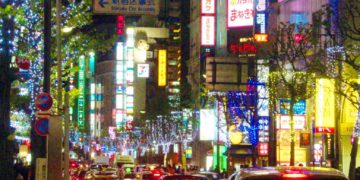




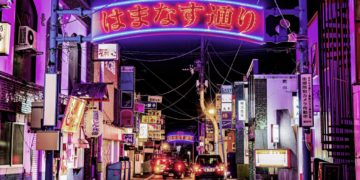
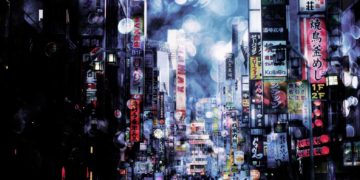
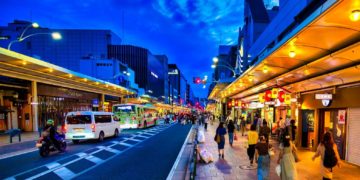
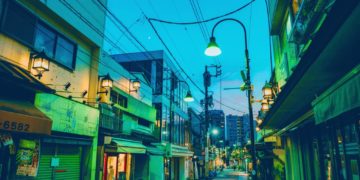

While Tokyo, Kyoto, and Osaka dominate the spotlight for night photography, rural Japan offers an entirely different kind of visual magic—quiet streets illuminated by lanterns, misty castles, and small towns that glow under starry skies. These underrated destinations provide fewer crowds, authentic ambiance, and timeless beauty. If you’re seeking to capture the soul of Japan beyond the cities, these are the nighttime photo gems worth discovering.
1. Higashi Chaya District – Kanazawa
Why It’s Special: A preserved geisha district with gold-leaf shops and traditional teahouses, softly lit after dark with vintage street lamps.
Photo Tips:
- Shoot during blue hour for warm-cool contrast.
- Use reflections in rain puddles or windows.
Bonus: Less touristy than Kyoto’s Gion, offering unobstructed compositions.
2. Bikan Historical Quarter – Kurashiki
Why It’s Atmospheric: Edo-era warehouses and willow-lined canals create a picture-perfect scene. At night, the stone bridges and old merchant houses are elegantly lit.
Photo Tips:
- Long exposure to enhance canal reflections.
- Capture silhouettes of the small boats for storytelling.
Tripod-Friendly? Yes, but avoid blocking narrow pathways.
3. Nagasaki Lantern Festival
When: Late January to mid-February
Why It’s Stunning: Over 15,000 lanterns and dozens of dragons, zodiac creatures, and arches light up the streets of Nagasaki Chinatown and central parks.
Photo Tips:
- Use a fast lens to capture detail amid moving crowds.
- Night portraits under red lanterns are striking.
Bonus: Combine photography with local street food.
4. Takayama Old Town
Why It’s Timeless: Wooden merchant homes from the Edo period line cobblestone streets. The town is peaceful and empty at night—ideal for moody, cinematic shots.
Photo Tips:
- Great for black-and-white or low-saturation edits.
- Shoot around 9–10 PM when tourists are gone.
Weather Tip: Morning fog lingers after a cold night.
5. Uwajima Castle & Streets
Why It’s Intimate: One of only 12 remaining original castles in Japan, with atmospheric lighting. The surrounding town has narrow lantern-lit streets and hillside temples.
Photo Tips:
- Use wide lens for castle with night sky.
- Climb early evening for golden hour then shoot through dusk.
Access Tip: Best with a rental car.
6. Beppu Steam Streets
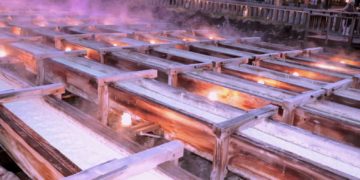
Why It’s Dreamlike: Clouds of geothermal steam rising under streetlights make Beppu feel like a fantasy world. Best seen in Kannawa District.
Photo Tips:
- Use slow shutter (1/4–1 sec) for drifting steam.
- Backlight the steam with a headlamp or flashlight.
Caution: Protect lens from condensation.
7. Yufuin Floral Village After Dark
Why It’s Whimsical: A miniature European village nestled in Oita Prefecture, with fairy-tale cottages and lantern-lit alleys.
Photo Tips:
- Perfect for handheld night portraits.
- Use wide aperture (f/1.4–2.0) to capture glow.
Timing: Best after sunset when shops close and lights remain.
8. Matsue Castle by Night
Why It’s Imposing: This original black castle reflects in the moat and glows under focused spotlighting. Few tourists venture here at night.
Photo Tips:
- Reflections are best captured from the western side.
- Include trees or lanterns for foreground interest.
Accessibility: Walking distance from central Matsue.
9. Shirakawa-go Thatched Villages (Winter Illumination)
When: Selected weekends in January–February
Why It’s Magical: The snow-covered gassho-style houses are lit from within and above, turning the village into a glowing postcard.
Photo Tips:
- Use a telephoto from the hilltop viewing platform.
- Bring warmers—temperatures drop below freezing.
Reservation Tip: Night access requires prior booking.
10. Amanohashidate by Night
Why It’s Serene: One of Japan’s three scenic views, this sandbar connecting the sea looks poetic under moonlight or low tide reflections.
Photo Tips:
- Use a drone for top-down long exposure (check local laws).
- Shoot from the mountaintop park using a tripod.
Best Time: Summer nights with little wind.
Night Photography in Rural Japan: Tips
- Transportation: Trains may stop early—rent a car or stay overnight.
- Tripods: Usually allowed but use courtesy in villages.
- Lighting: Carry a soft LED or flashlight for subtle foregrounds.
- Noise: Respect silence in residential areas—night peace is sacred.
- Language: Download offline maps and translation apps.
Conclusion: A Slower Glow, A Deeper Story
Rural Japan’s night photography isn’t about spectacle. It’s about texture, silence, and soul. In the warm light of an old streetlamp or the steam rising in moonlight, you’ll find stories worth capturing—and memories most tourists miss.
Let your lens slow down, breathe deep, and embrace the hidden beauty of Japan after dark.
📎 Discover more rare scenes at: https://afterdarkjapan.com