




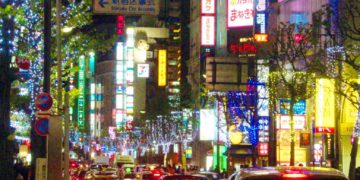








You’re walking through the neon-lit streets of Shibuya at 10 PM when suddenly, a wall of sound hits you—a cacophonous symphony of metal balls cascading, electronic melodies blaring, and the rhythmic clicking of hundreds of machines operating in perfect chaos. Welcome to Japan’s most misunderstood cultural institution: the pachinko parlor.
While most foreign visitors either avoid these establishments entirely or treat them as mere tourist curiosities, they’re missing one of Japan’s most fascinating anthropological phenomena. Pachinko parlors aren’t just gambling venues—they’re complex social ecosystems that reveal profound truths about Japanese society, community formation, and the human need for ritualistic escape.
The Acoustic Architecture of Escape
The first thing that strikes any newcomer to a pachinko parlor isn’t the visual spectacle—it’s the overwhelming auditory assault. But this isn’t accidental noise; it’s carefully orchestrated sensory architecture designed to create what anthropologists call “liminal space”—a threshold between ordinary reality and an altered state of consciousness.
The sound design of modern pachinko parlors operates on multiple psychological frequencies. The constant rain of steel balls creates a white noise effect that drowns out external anxieties, while the electronic soundtracks—often borrowed from popular anime and J-pop—trigger dopamine responses through familiar cultural references. This acoustic cocoon serves a crucial social function: it creates temporary anonymity in one of the world’s most socially constrained societies.
Dr. Kenji Yamamoto, a cultural anthropologist at Tokyo University who has spent five years studying pachinko culture, explains: “The parlor’s soundscape functions as auditory camouflage. Salary workers can shed their social roles and hierarchies within this sonic sanctuary. The noise that foreigners find overwhelming is actually liberating for regular players—it’s the sound of social invisibility.”
The Ritual Choreography of Daily Transformation
To understand pachinko’s anthropological significance, you must observe the transformation ritual that occurs at the parlor entrance. Watch carefully as a businessman in a pressed suit approaches the establishment. At the threshold, he pauses—not from hesitation, but to perform an almost unconscious metamorphosis.
The tie is loosened, sometimes removed entirely. The rigid posture of the corporate world softens. The carefully maintained social mask begins to slip. By the time he reaches his chosen machine, he’s undergone what Victor Turner would recognize as a classic example of “communitas”—the temporary dissolution of hierarchical social structures.
This transformation isn’t unique to any single demographic. Office ladies, construction workers, retirees, and even university students undergo similar metamorphoses. The pachinko parlor serves as Japan’s secular temple of social leveling, where titles, ages, and class distinctions temporarily dissolve into the democracy of chance and skill.
The Geography of Invisible Communities
Pachinko parlors reveal their anthropological complexity through their spatial organization. Regular players don’t choose machines randomly—they establish territories through unspoken social contracts that would fascinate any urban planner studying human spatial behavior.
The “morning queue community” represents one of Japan’s most intriguing informal social structures. These are the players who arrive before opening, forming orderly lines that exist purely through social consensus. No tokens are distributed, no numbers assigned—yet the hierarchy remains inviolate. Miss too many mornings, and your position in the invisible pecking order shifts.
Within the parlor itself, micro-communities form around machine types and skill levels. The pachislot section attracts younger players seeking strategy-based gambling, while traditional pachinko machines draw older participants who find comfort in pure chance. These aren’t just gaming preferences—they’re tribal affiliations with their own etiquette, shared knowledge, and mutual recognition systems.
Perhaps most fascinating are the “machine whisperers”—players who develop quasi-spiritual relationships with specific machines. They’ll travel across Tokyo to play the same machine, bringing it small offerings (a specific brand of cigarettes placed on top), and maintaining superstitious rituals that border on the religious. This behavior reveals pachinko’s function as a form of techno-animism, where machines acquire personalities and spiritual significance.
The Economics of Social Connection
The money-changing ritual in pachinko parlors represents one of Japan’s most elegant legal fictions—and reveals profound insights into how societies maintain cultural practices that exist in legal gray areas. The three-store system (san-ten hōshiki) isn’t just a legal workaround; it’s a masterclass in collective social agreement.
Players don’t officially gamble for money—they win prizes that they immediately sell to an unaffiliated third party who then sells them back to the parlor. Everyone knows exactly what’s happening, but the ritual maintains the fiction that preserves social harmony. This system demonstrates the Japanese concept of “tatemae” (public facade) on an industrial scale.
But the economic anthropology runs deeper. Many parlors function as informal community centers for Japan’s economically marginalized populations. Elderly players on fixed incomes use small-stake machines as a form of social interaction that costs less than a coffee shop visit. The parlor provides heating in winter, air conditioning in summer, and most importantly, a space where loneliness temporarily dissolves into the collective experience of shared hope and disappointment.
The Nighttime Sociology of Altered States
After 9 PM, pachinko parlors transform into something entirely different. The after-work crowds thin out, replaced by what regulars call the “night tribe”—a collection of individuals for whom the parlor serves as an alternative to bars, clubs, or going home to empty apartments.
The nighttime atmosphere becomes more intimate despite the noise. Players engage in subtle forms of communication—sharing cigarettes, offering machine advice, or simply acknowledging each other’s presence through nods and glances. These interactions might seem minimal to outsiders, but they represent significant social connections for people who might otherwise spend evenings in complete isolation.
Female players, often overlooked in discussions of pachinko culture, become more visible during evening hours. They represent nearly 40% of nighttime players and have created their own sub-communities with distinct behavioral patterns. These women often use pachinko parlors as spaces of temporary freedom from domestic expectations—a few hours where they control their own decisions and destiny.
The Therapeutic Anthropology of Repetitive Ritual
Modern psychology recognizes repetitive behaviors as potentially therapeutic for anxiety and stress management. Pachinko parlors inadvertently serve as Japan’s largest network of stress-relief centers, providing what researchers call “behavioral meditation” through repetitive action.
The physical act of playing pachinko—the rhythmic launching of balls, the focused attention on machine patterns, the measured breathing that naturally accompanies concentration—mirrors meditation practices found in Buddhist temples. Players often report entering trance-like states where workplace anxieties and social pressures temporarily vanish.
This therapeutic function becomes particularly evident during Japan’s high-stress periods: tax season, university entrance exams, corporate restructuring announcements. Parlor attendance spikes during these times, suggesting that pachinko serves as a pressure valve for a society that provides few outlets for stress expression.
Navigating the Cultural Landscape: A Foreign Observer’s Guide
For foreign visitors seeking to understand rather than merely experience pachinko culture, certain ethnographic approaches prove more revealing than others. The key is to observe rather than participate initially, treating the parlor as an anthropological field site rather than an entertainment venue.
Position yourself near the entrance during shift changes (around 6 PM and 11 PM) to witness the transformation rituals. Notice how players’ postures, expressions, and even walking patterns change as they enter and exit. Pay attention to the spatial dynamics—how people choose machines, the unspoken rules governing proximity, and the subtle territorial markings.
The staff interactions provide another window into pachinko’s social complexity. Counter staff operate with almost ritualistic precision, their movements choreographed to maintain the parlor’s flow while respecting players’ need for minimal social interaction. They’re trained to be simultaneously invisible and helpful—a balance that reflects broader Japanese service culture.
For those ready to participate, start during daytime hours when the atmosphere is less intense. Choose machines in the “beginner” section (marked with friendly signage) and observe neighboring players’ techniques. Don’t be surprised if someone offers unsolicited advice—this gesture represents temporary induction into the community.
The Generational Evolution of Pachinko Culture
Contemporary pachinko parlors are undergoing rapid cultural evolution as they adapt to Japan’s changing demographics. Younger players increasingly prefer pachislot machines that require more skill and strategy, while older generations maintain loyalty to pure chance-based pachinko.
This generational divide reflects broader social changes in Japanese society. Millennials and Gen Z players approach pachinko as entertainment rather than escapism, treating it more like video gaming than traditional gambling. They’re more likely to set time and money limits, play socially with friends, and integrate the experience with other nightlife activities.
Meanwhile, parlors are adapting their cultural functions to serve aging populations. Some now offer senior discounts, comfortable seating areas, and staff trained in elder care. They’re unconsciously evolving into community centers that provide social contact and mental stimulation for isolated older adults.
The Digital Transformation of Analog Ritual
Modern pachinko machines incorporate increasingly sophisticated technology—digital displays, internet connectivity, and smartphone integration—yet the core ritual remains remarkably unchanged. This paradox reveals something profound about cultural persistence in the face of technological change.
Players still perform the same entrance rituals, establish the same territorial behaviors, and seek the same psychological rewards that their parents and grandparents found decades ago. The technology enhances rather than replaces the fundamental anthropological functions of the experience.
The introduction of IC card systems has created new forms of community identity. Players can now track their histories across multiple parlors, creating data-driven narratives of their pachinko journeys. These digital footprints become sources of social identity and personal mythology within the community.
Beyond the Noise: The Silence of Understanding
The true anthropological insight about pachinko parlors comes not from their overwhelming sensory assault, but from understanding the profound silence they provide—silence from social judgment, silence from hierarchical expectations, silence from the endless performance of daily Japanese life.
In a society where individual expression often conflicts with group harmony, pachinko parlors offer a space for personal agency within communal experience. Players make individual choices (which machine, how much to spend, when to leave) while participating in collective ritual (the shared experience of chance, hope, and community presence).
This balance between individual agency and collective experience reveals pachinko’s deeper cultural function. It’s not just entertainment or even gambling—it’s a pressure release valve that allows Japanese society to maintain its highly structured social systems by providing regular opportunities for temporary escape.
The Future of Japan’s Noisiest Night Ritual
As Japan continues evolving—becoming more international, more digital, more individualistic—pachinko parlors face existential questions about their cultural relevance. Yet their fundamental anthropological functions—community creation, stress relief, social leveling, and ritualistic escape—remain as relevant as ever.
The parlors are quietly adapting, incorporating elements of manga cafes, adding food services, and creating more comfortable social spaces. Some experiment with quieter sections or theme-based environments that attract different demographics. The industry recognizes that survival depends on evolution while preserving core cultural functions.
For foreign observers seeking to understand contemporary Japan, pachinko parlors offer invaluable insights into how traditional societies adapt modern technologies and global influences while maintaining essential cultural practices. They represent Japan’s remarkable ability to preserve community and ritual within rapid social change.
The next time you hear that wall of sound emanating from a pachinko parlor, remember that you’re encountering one of the world’s most successful examples of cultural adaptation—a space where ancient human needs for community, ritual, and temporary escape from social constraints find expression through distinctly modern means.
The noise isn’t chaos—it’s the sound of a society taking care of its psychological and social needs through collectively agreed-upon rituals that outsiders might find bewildering but that serve profound anthropological functions for participants. In understanding pachinko parlors, we understand something essential about how human communities create meaning, connection, and psychological relief within the constraints of complex modern societies.