









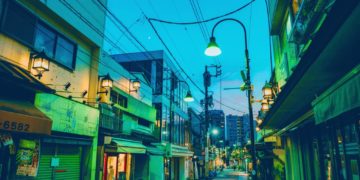


Introduction: The Night in Japanese Imagination
When you think of Japan’s famous imagery—cherry blossoms, neon cities, tranquil temples—you might picture them bathed in sunlight.
But the Japanese night holds its own unique and often haunting beauty.
In Japanese culture, the night is not simply the absence of light.
It’s a sacred, mysterious space—where boundaries blur between the living and the dead, the real and the unreal.
It’s where spirits roam, monsters whisper, and ancient fears quietly awaken under the stars.
This fascination with night is deeply woven into Japanese folklore, ghost stories, and even everyday superstitions.
Let’s explore why the night is such a profound, beautiful, and terrifying element of Japanese tradition.
1. Why “Night” Holds Special Meaning in Japan
In many cultures, nighttime evokes mystery and fear, but in Japan, night holds an especially complex place.
Shinto and Buddhist Beliefs
- In Shinto, the indigenous religion of Japan, nature is full of spirits (kami), both benevolent and mischievous.
- In Buddhism, the idea of the transient world (mujo) means life, death, and the spirit world are all interconnected.
Thus, the night becomes a liminal time—where the veil between worlds grows thin, where kami or spirits might walk unnoticed among humans.
The Idea of “Ma” (間)
In Japanese aesthetics, “ma” means the space between things—the silence between sounds, the stillness between actions.
Night represents the ultimate “ma”:
- A pause between busy days
- A space where possibilities open
- A time when unseen forces might stir
2. Traditional Beliefs: Spirits, Darkness, and Nature
For centuries, Japanese people believed the natural world was inhabited by invisible presences—spirits, yokai (supernatural beings), and ghosts.
Nighttime was when:
- Rivers might reveal a water spirit (kappa)
- Mountains might conceal a mischievous tengu
- Empty fields might host ghostly lights (onibi)
Even today, rural areas whisper old warnings:
Don’t whistle at night—you’ll summon snakes or spirits.
Don’t point at graves under the moon—you’ll invite bad luck.
Fear of the night was not superstition—it was survival.
In ancient times, the dark was dangerous: wild animals, treacherous paths, unseen threats.
Stories of spirits served as warnings wrapped in wonder.
3. Shrines, Cemeteries, and Sacred Places After Dark
Shinto Shrines at Night
During the day, shrines are places of worship, prayer, and celebration.
At night, however, they transform.
The glowing lanterns, deep shadows, and silent pathways evoke a sacred—and sometimes eerie—atmosphere.
Cemeteries and Jizo Statues
Small stone statues of Jizo (a guardian deity of children and travelers) dot the countryside and urban parks.
At night, these statues—often adorned with faded red bibs—stand watch over lonely paths.
Japanese people are culturally respectful of night spirits:
- Visiting shrines at night without purpose is avoided.
- Speaking ill of spirits after dark is considered bad luck.
The stillness invites reflection—but also caution.
4. How Fear Became Entertainment: Ghost Stories in Summer
Why does Japan associate ghost stories with summer, not Halloween?
Answer: Summer Is Hot. Ghost Stories Are Cool.
Historically, during Japan’s hot, humid summers, people would gather in the evenings to tell scary stories.
- Goosebumps and chills from fear were considered refreshing.
- This tradition evolved into formal storytelling styles like Kaidan.
The Hyakumonogatari Kaidankai (100 Ghost Stories Game)
Originating among samurai, this chilling game involved:
- Gathering in a dark room lit by 100 candles
- Telling one ghost story per candle
- Extinguishing a candle after each story
- With each candle, the room grew darker—and spirits were said to be summoned if you reached the 100th.
Today, summer ghost story TV shows, haunted house attractions, and horror film releases are part of seasonal culture.
In Japan, horror is not reserved for autumn.
It’s a midsummer ritual—to chill the body, and perhaps the soul.
5. Modern Reflections: Why Night Still Fascinates Japanese Society
Urban Legends and Modern Ghost Stories
Even today, urban legends thrive:
- Ghosts in school restrooms (like Hanako-san)
- Mysterious “woman in white” sightings
- Tales of cursed video games, phone numbers, tunnels
Anime, Manga, and Nighttime Themes
Many popular works embrace nighttime fear and beauty:
- “Spirited Away” (Ghibli): A hidden spirit world after dark
- “Another” (anime): A quiet, cursed town under misty nights
- “Kimetsu no Yaiba” (Demon Slayer): Demons only roam at night
The night remains a source of creativity—a place where imagination runs free, fear sharpens, and strange beauty blooms.
6. Conclusion: Japan’s Unique Relationship with the Night
In Japan, night is never simply dark.
It’s shimmering with unseen lives, haunted by stories, and infused with both fear and wonder.
Walking through a shrine at midnight.
Listening to ghost stories on a humid summer night.
Glimpsing a fox spirit at the corner of your eye as you walk home.
These moments aren’t about terror—they’re about connection.
To the past, to nature, to the parts of ourselves we usually hide in the light.
So if you ever find yourself wandering Tokyo after dark,
slow your steps.
Listen carefully.
The night might be trying to tell you a story.