








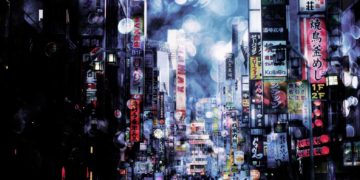
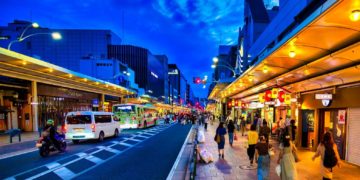
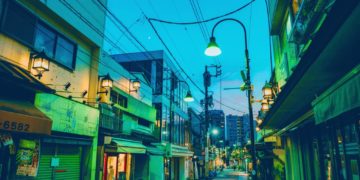

Tokyo’s skyline is globally recognized for its neon glow—vivid, colorful, and ever-shifting. But behind the dazzling lights are decades of history, cultural symbolism, and emotional storytelling. This article takes you beyond aesthetics, exploring how Tokyo’s neon came to be, what it symbolizes, and how it shapes the city’s nighttime character.
1. From Paris to Shinjuku: Neon’s Arrival in Japan
Neon first arrived in Tokyo in the 1920s, imported from Europe and the U.S. It remained a novelty until after WWII. In the 1950s and 60s, Tokyo’s economic recovery brought with it a construction boom—and with that boom, the glowing signatures of neon signage.
By the 1980s, during Japan’s economic bubble, entire districts like Shinjuku and Ueno glowed with endless signage. Neon meant prosperity, energy, and futurism. Even as LED slowly replaced it from the early 2000s onward, Tokyo kept the nostalgic design language.
Today, the glow is less about technology and more about identity.
2. Color Theory and Urban Emotion
Tokyo’s neon color schemes are deeply embedded in cultural and psychological coding:
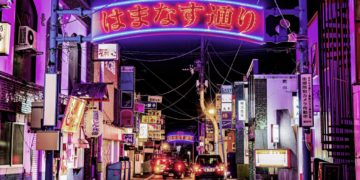
- Red: Kabukicho’s color. Sensual, exciting, dangerous.
- Blue/Purple: Often seen in upscale areas like Ginza. Cool elegance.
- Green/White: Safety, trust—frequently used for clinics, pharmacies.
- Yellow/Orange: Energy and friendliness. Common in izakayas and ramen shops.
These aren’t hard rules—but locals navigate Tokyo partially by hue. The color of a sign can say more than its text.
3. Tokyo’s Best Neon Walks
Kabukicho (Shinjuku)
The most famous glow in Japan. Neon covers everything—host clubs, ramen shops, theaters. Visit between 7PM–1AM for peak atmosphere. Don’t miss the Godzilla head peeking from Toho Cinema.
Akihabara
The electric town. Blinking anime signage, tech ads, arcades stacked 7 floors high. For some, it’s chaos. For others, pure joy.
Shibuya Crossing
A modern twist on neon. Giant LED screens dominate, but the energy is the same. Stand in the middle and feel the pulse.
Ginza
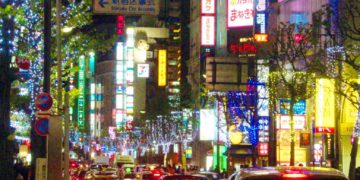
Neon goes luxury. Here, signs whisper instead of shout. LED strips glow gently on glass facades. It’s a more refined light show.
4. Tokyo’s Neon in Global Pop Culture
Neon Tokyo has inspired countless media:
- Blade Runner (1982): The dystopian future modeled on Shinjuku.
- Lost in Translation (2003): Emotionally distant, glowing Tokyo backdrops.
- Akira (1988), Ghost in the Shell (1995): Anime’s gritty urbanism, fueled by neon.
- Cyberpunk 2077, Persona 5: Game worlds mimicking Tokyo’s glow and grit.
The neon light isn’t just a background. It’s a character.
5. Photographing Neon: Techniques & Spots
- Best Time: Right after rain. Reflections double the glow.
- Gear: Use night mode, or DSLR with low shutter speeds and ISO 800–1600.
- Spots: Golden Gai for intimacy, Ueno Ameyoko for cluttered charm, Omoide Yokocho for smoky light.
Avoid crowds by going on weeknights or after 10PM.
6. What Tokyo’s Neon Says About the City
It says: “This city never sleeps.”
It says: “You’re not alone in your solitude.”
For locals, neon is just the background. For visitors, it’s the dream. But for everyone, it’s the glow that unites Tokyo’s contradictions: loneliness and connection, chaos and order, history and futurism.
So next time you walk under those signs, don’t just snap a photo. Ask yourself what story they’re telling.
📎 Discover more at: https://afterdarkjapan.com