












Discovering the meditative beauty of Tokyo’s most unchanged neighborhood when silence falls
Introduction: The Art of Beautiful Emptiness
In a city that never truly sleeps, where neon lights assault the senses and crowds pulse through districts like blood through arteries, there exists a pocket of Tokyo that practices the art of beautiful emptiness. Yanaka—the historic shitamachi district that survived both the Great Kanto Earthquake and World War II bombings—offers something increasingly rare in modern urban life: the profound peace that comes when a neighborhood simply… stops.
By 9 PM, when most of Tokyo is just hitting its stride, Yanaka begins its nightly transformation into something that feels more like a meditation retreat than a metropolitan district. The famous Yanaka Ginza shopping street goes dark, its cheerful daytime bustle replaced by the gentle sound of metal shutters rolling down. Temple bells mark the hours across a landscape dotted with over 70 Buddhist temples and Shinto shrines. And in the spaces between—the narrow alleyways, the traditional wooden houses, the stone steps leading to ancient cemeteries—a different kind of magic emerges.
This is where Tokyo’s famous cats emerge from their hiding places to patrol silent streets. Where century-old sake shops transform into intimate gathering places for locals who’ve been meeting the same friends at the same counters for decades. Where the absence of spectacle becomes the most spectacular thing of all—a reminder that sometimes the most profound urban experiences come not from what a place offers, but from what it chooses to withhold.
The Geography of Silence: Understanding Yanaka’s Unique Layout
A District Shaped by Survival
Yanaka’s contemporary character stems from a remarkable historical accident: it’s one of the few areas of central Tokyo that escaped the destruction that befell most of the city during the 20th century. While surrounding districts were rebuilt with modern efficiency, Yanaka retained its Edo-period street patterns, traditional wooden architecture, and the organic relationship between sacred and secular spaces that once defined all of Tokyo.
This survival created a living museum of pre-modern Tokyo urban planning, where narrow streets follow ancient paths between temples, where residential areas blend seamlessly with religious precincts, and where the pace of life remains governed by traditional rhythms rather than contemporary urgency. The district’s 2.5 square kilometers contain more temples per capita than any other area of Tokyo, creating a landscape where the sacred and mundane coexist in ways that have become impossible in the rest of the city.
The Temple Network Effect
After dark, Yanaka’s extensive temple network creates a unique urban environment where religious architecture becomes the dominant visual and spiritual presence. Unlike daytime hours when temples compete with shops, restaurants, and tourist activities for attention, evening hours allow the district’s spiritual infrastructure to assert its organizing influence over the entire neighborhood.
The temples don’t offer night illumination or tourist programs—instead, they provide something more valuable: anchoring points for contemplation and navigation through a district where getting lost becomes part of the experience. The interplay between lit residential areas and darkened temple grounds creates a rhythm of light and shadow that guides evening exploration while encouraging the kind of slow, mindful movement that urban life typically discourages.
The Yanaka Ginza After Hours: Beauty in Closure
The Poetry of Shuttered Dreams
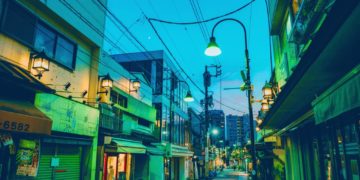
When the last shop on Yanaka Ginza pulls down its metal shutter around 8 PM, the famous shopping street undergoes a transformation that reveals its essential character more clearly than any daytime bustle ever could. The narrow pedestrian street, crowded with visitors during daylight hours, becomes a corridor of silence where the only sounds are footsteps echoing off traditional storefronts and the distant hum of residential life.
This closure isn’t abandonment—it’s restoration. The street returns to its original function as a neighborhood thoroughfare connecting residential areas, revealing architectural details that crowds obscure during busy hours. The traditional shop facades, the careful proportions of the street width, and the gentle slope that earned the area its “sunset steps” nickname all become visible in ways that daylight tourism prevents.
Reading the Shutters: A Cultural Archive
The metal shutters that close off Yanaka Ginza’s shops after dark tell their own stories through hand-painted signs, weathered surfaces, and the accumulated patina of decades of daily use. Many display traditional calligraphy announcing shop names and specialties, others feature faded artwork that provides glimpses into neighborhood history and cultural values.
Walking the shuttered street becomes an exercise in urban archaeology, where careful observation reveals layers of commercial and cultural history that remain invisible during operating hours. The shutters themselves represent a uniquely Japanese approach to commercial architecture—temporary barriers that preserve rather than hide the character of individual businesses.
The Cat Highway
As human activity diminishes on Yanaka Ginza, the district’s famous feline population claims the street as their primary thoroughfare. Cats emerge from hiding places throughout the neighborhood to use the wide, flat street as a meeting point and hunting ground, creating impromptu social scenes that provide entertainment for the few human observers present during evening hours.
These cat gatherings aren’t random—they follow territorial patterns and social hierarchies that have developed over generations of feline residents. Understanding these patterns provides insight into the neighborhood’s ecological balance and the ways that animal and human communities coexist in dense urban environments.
Sacred Spaces in Shadow: Temple Culture After Dark
The Philosophy of Closed Temples
Unlike many tourist destinations where religious sites offer evening illumination and extended hours, Yanaka’s temples practice a form of spiritual hospitality that emphasizes boundary and limitation. By closing their gates after dark and offering no special lighting or programs, these temples communicate important aspects of Japanese Buddhist and Shinto practice that contemporary religious tourism often obscures.
The closed temples invite external observation and contemplation rather than internal exploration and consumption. This approach reflects traditional Japanese concepts of sacred space that emphasize respect for boundaries, appreciation for limitation, and the understanding that some experiences require separation rather than access.
Architectural Meditation in Moonlight
Yanaka’s temple architecture reveals different aspects of its design philosophy under moonlight and street lamp illumination than during bright daylight hours. The subtle curves of traditional rooflines, the relationship between different building elements, and the integration of natural and constructed materials all become more apparent when viewed in the simplified lighting conditions of evening hours.
This architectural meditation requires different observation skills than daytime temple visiting. Instead of focusing on decorative details, colors, and obvious visual elements, evening temple observation emphasizes form, proportion, and the interplay between built structures and natural elements like mature trees, stone arrangements, and carefully designed spatial relationships.
The Sound Landscape of Sacred Spaces
While closed temples offer no visual access to their interior spaces, they contribute significantly to Yanaka’s evening sound landscape through temple bells, evening prayers, and the subtle acoustic effects created by traditional architecture. These sounds provide spiritual presence that doesn’t require visual confirmation or physical access to create meaningful religious experiences.
Learning to recognize and appreciate these acoustic elements enhances evening exploration while demonstrating respect for the religious communities that maintain these practices. The sounds become navigation aids, temporal markers, and reminders of the spiritual dimensions that continue to shape neighborhood life even when temples aren’t open for public access.
Kakuuchi Culture: The Art of Standing Sake
Understanding Traditional Sake Retail
One of Yanaka’s most authentic cultural experiences emerges after dark in the district’s traditional sake shops that transform into informal drinking establishments known as kakuuchi—literally “corner drinking.” These venues, typically small sake retailers during daytime hours, offer standing-room-only drinking experiences where customers purchase sake directly from shop inventory and consume it on the premises.
Kakuuchi culture represents a distinctly working-class approach to alcohol consumption that developed in traditional neighborhoods where residents couldn’t afford separate drinking establishments but still wanted social venues for evening relaxation. The practice reflects Japanese values of efficiency, community building, and the integration of commercial and social activities within neighborhood contexts.
The Ritual of Selection and Service
At authentic kakuuchi establishments, customers participate in sake selection through direct interaction with shop owners who function as informal sommeliers, offering recommendations based on personal preferences, seasonal availability, and food pairing opportunities. This educational component transforms casual drinking into cultural learning experiences that connect customers to regional sake traditions and brewing techniques.
The service ritual involves purchasing sake by the glass or small bottle, often accompanied by simple appetizers or tsumami that complement specific sake varieties. The standing format encourages relatively brief visits that emphasize quality over quantity, social interaction over solitary consumption, and appreciation for craftsmanship over mere alcohol consumption.
Social Dynamics of Neighborhood Drinking
Yanaka’s kakuuchi establishments function as neighborhood social centers where regular customers maintain ongoing relationships with shop owners and fellow patrons. These venues create opportunities for cross-generational interaction, cultural exchange, and community building that larger, more formal drinking establishments cannot replicate.
For visitors, participating in kakuuchi culture requires understanding the social protocols that govern these intimate community spaces. This includes showing respect for regular customers, engaging appropriately with shop owners, and contributing positively to the social atmosphere that makes these venues valuable to neighborhood residents.
The Walking Meditation of Empty Streets
Developing Slow Urban Movement
Yanaka after dark rewards visitors who adopt walking practices that reflect the district’s contemplative character rather than typical urban navigation patterns. This involves moving slowly enough to observe architectural details, seasonal changes, and subtle environmental variations that rapid movement obscures.
The district’s narrow streets, irregular intersections, and frequent dead ends naturally encourage exploratory rather than goal-directed movement. This walking style aligns with traditional Japanese concepts of sanpo (strolling) that emphasize process over destination and discovery over efficiency.
Reading the Neighborhood’s Emotional Geography
Evening exploration of Yanaka reveals emotional qualities in different areas that daylight activity masks. Certain streets and intersections possess distinctive atmospheric qualities—some melancholic, others peaceful, some energizing despite their quietness—that become apparent only during periods of minimal human activity.
Understanding these emotional variations helps visitors appreciate the neighborhood’s complexity while developing sensitivity to environmental factors that influence urban experiences. The practice of reading emotional geography transforms casual sightseeing into a form of environmental psychology that enhances appreciation for urban design and community character.
The Art of Productive Lostness
Yanaka’s organic street pattern and minimal evening signage create opportunities for becoming temporarily lost in ways that enhance rather than frustrate the exploration experience. The district’s compact size and clear boundaries ensure that disorientation remains manageable while providing opportunities for unexpected discoveries.
Embracing temporary lostness allows visitors to encounter aspects of the neighborhood that planned routes might miss—hidden temples, residential architecture, small parks, and microenvironments that contribute to Yanaka’s distinctive character. This approach requires comfort with uncertainty and appreciation for serendipitous experiences over controlled tourism.
Residential Life and Community Rhythms
Observing Daily Life Transitions
Evening hours in Yanaka provide opportunities to observe the transition from public to private life in ways that respect community privacy while offering insights into contemporary Japanese residential culture. The sounds of evening meals being prepared, television programs, and family conversations create an audio landscape that communicates community vitality without requiring visual intrusion.
These observations help visitors understand how traditional neighborhood structure continues to support community life in contemporary Tokyo, providing models for urban living that balance individual privacy with social connection.
Seasonal Rhythms and Community Patterns
Yanaka’s residential community follows seasonal patterns that become apparent through evening observation—the sounds of different seasonal activities, variations in lighting patterns, and changes in outdoor space usage that reflect both climatic adaptation and cultural traditions.
Understanding these seasonal rhythms provides insight into the ways that traditional Japanese culture continues to influence contemporary urban life, creating community patterns that connect residents to natural cycles and cultural observances that modern city life often obscures.
Intergenerational Community Dynamics
The district’s evening rhythms reveal intergenerational community patterns as elderly residents take evening walks, middle-aged neighbors tend to small gardens, and families navigate the transition from work and school to home life. These observations provide insights into Japanese community structure and the ways that traditional neighborhoods continue to support diverse demographic groups.
Culinary Culture in the Quiet Hours
Traditional Food Shops and Evening Service
Several of Yanaka’s traditional food shops extend their hours beyond typical retail schedules to serve neighborhood residents with evening meal components, creating opportunities for visitors to observe authentic local food culture and purchasing patterns.
These establishments often feature regional specialties, traditional preparation methods, and customer relationships that reflect decades of community service. The evening shopping patterns reveal preferences for fresh, seasonal ingredients and the importance of daily food procurement in Japanese domestic culture.
Vending Machine Culture and Community Convenience
Yanaka’s strategic placement of vending machines creates a unique aspect of neighborhood culture where 24-hour access to beverages and snacks supports both resident convenience and visitor needs without requiring staffed retail operations.
The selection and positioning of vending machines reflect community preferences and usage patterns, providing insights into local consumption habits and the ways that automated retail supports traditional neighborhood structure.
Late-Night Dining Options
The few restaurants that remain open past 9 PM in Yanaka typically serve neighborhood residents rather than tourists, creating opportunities for authentic dining experiences that reflect local preferences and traditional preparation methods.
These establishments often offer simple, high-quality dishes that emphasize seasonal ingredients and traditional cooking techniques, providing cultural insights through food that more tourist-oriented restaurants cannot match.
Seasonal Variations in Evening Atmosphere
Spring: Cherry Blossoms and Evening Contemplation
Spring brings unique opportunities for evening cherry blossom appreciation in Yanaka’s numerous temple grounds and small parks. Unlike the crowded daytime hanami celebrations in larger parks, evening cherry blossom viewing in Yanaka offers contemplative experiences that align with traditional aesthetic appreciation.
The combination of temple architecture, mature cherry trees, and minimal lighting creates atmospheric conditions that enhance appreciation for the subtle beauty and symbolic significance of cherry blossoms in Japanese culture.
Summer: Cooling Traditions and Evening Relief
Summer evenings in Yanaka feature traditional cooling practices including evening temple visits, increased outdoor activity, and the use of traditional architectural features like deep eaves and cross-ventilation to create comfortable microclimates.
The district’s traditional architecture provides natural cooling that makes evening exploration more comfortable than in more modern areas of Tokyo, while the increased evening activity creates more opportunities for community observation and cultural interaction.
Autumn: Color Changes and Seasonal Transition
Autumn brings dramatic changes to Yanaka’s extensive tree cover, creating visual spectacles that enhance evening exploration while providing natural markers for seasonal transition and cultural observances.
The combination of autumn foliage with traditional architecture and temple settings creates some of the most beautiful evening scenes in Tokyo, while the cooler temperatures encourage extended outdoor exploration and contemplation.
Winter: Minimalism and Indoor Warmth
Winter in Yanaka emphasizes the aesthetic principles of minimalism and simplicity that define Japanese traditional culture, as bare tree branches, simplified landscapes, and reduced outdoor activity create opportunities for appreciating subtle beauty and architectural form.
The contrast between cold outdoor environments and warm indoor spaces becomes more pronounced, creating opportunities for appreciating traditional heating methods, winter food culture, and the community practices that support neighborhood cohesion during challenging seasons.
Practical Guidance for Evening Exploration
Optimal Timing and Route Planning
The most rewarding Yanaka evening experiences typically occur between 8 PM and 10 PM, when daytime tourist activity has ceased but residential community life remains active. This timing allows observation of the neighborhood’s transition from public to private use while providing access to the few commercial establishments that extend their evening hours.
Route planning should emphasize flexibility and responsiveness to discoveries rather than efficient navigation between predetermined destinations. The district’s compact size makes it impossible to become seriously lost, while its organic street pattern rewards exploratory movement over direct navigation.
Appropriate Behavior and Cultural Sensitivity
Evening exploration of Yanaka requires heightened sensitivity to residential privacy and community boundaries. This includes maintaining quiet voices, avoiding intrusive photography, and respecting private property boundaries that may not be clearly marked.
The goal is observation and appreciation rather than documentation or consumption, requiring visitors to approach the neighborhood as respectful guests rather than entitled tourists.
Equipment and Preparation
Evening exploration of Yanaka requires minimal special equipment but benefits from preparation that enhances observation capabilities. A small flashlight for poorly lit areas, comfortable walking shoes for uneven surfaces, and weather-appropriate clothing for extended outdoor time all contribute to successful experiences.
More importantly, mental preparation for slower-paced, contemplative exploration helps visitors appreciate the district’s unique offerings rather than expecting conventional tourist entertainment.
Safety and Navigation
Yanaka is one of Tokyo’s safest districts, but evening exploration requires attention to uneven surfaces, minimal lighting in some areas, and the occasional need to navigate around residential areas where tourist presence might be inappropriate.
The district’s clear boundaries and prominent landmarks make navigation relatively straightforward, while the strong community presence provides reassurance for visitors concerned about safety during evening exploration.
The Philosophy of “Nothing” as Something
Understanding Ma: The Beauty of Emptiness
Yanaka after dark embodies the Japanese aesthetic concept of ma—the profound beauty found in emptiness, pause, and negative space. Unlike Western urban concepts that emphasize filling space with activity and stimulation, Yanaka’s evening character demonstrates how emptiness can create more meaningful experiences than constant stimulation.
This philosophical approach to urban space requires visitors to adjust their expectations and appreciation methods, learning to find beauty in what isn’t present rather than cataloging what is available for consumption.
The Meditative Value of Boredom
In a culture obsessed with constant entertainment and stimulation, Yanaka offers the rare opportunity to experience productive boredom—the mental state that allows for genuine reflection, creative thinking, and spiritual restoration that busy urban environments typically prevent.
This experience requires tolerance for periods without obvious entertainment or external stimulation, but rewards visitors with the kind of mental clarity and emotional restoration that conventional tourism rarely provides.
Urban Silence as Cultural Practice
The relative silence of evening Yanaka represents a cultural practice rather than mere absence of noise. This intentional quietness reflects Japanese values of consideration for others, respect for shared space, and the understanding that some experiences require protected environments to flourish.
Appreciating this cultural silence requires understanding it as an active choice rather than passive emptiness, recognizing the community effort required to maintain such peaceful environments in dense urban settings.
Conclusion: The Wisdom of Quiet Neighborhoods
Yanaka after 9 PM offers something increasingly rare in contemporary urban life: proof that neighborhoods can maintain their essential character without constant stimulation, that beauty exists in limitation as well as abundance, and that some of the most profound urban experiences come from places that choose restraint over spectacle.
For visitors seeking alternatives to Tokyo’s high-energy entertainment districts, Yanaka provides an entirely different model of urban nightlife—one based on contemplation rather than consumption, community observation rather than tourist attraction, and the understanding that sometimes the most valuable experiences come from places that offer very little in conventional terms.
This isn’t a destination for everyone. Yanaka’s evening character appeals primarily to visitors who appreciate subtle beauty, who find value in slow-paced exploration, and who understand that cultural authenticity often requires patience and sensitivity rather than immediate gratification. But for those who approach it appropriately, the district offers insights into Japanese urban culture that more obvious tourist destinations cannot provide.
The cats padding silently through empty streets, the soft glow of residential windows behind traditional facades, the distant sound of temple bells marking time across a landscape where time moves differently—these elements combine to create an urban experience that feels more like meditation than sightseeing.
In Yanaka’s quiet streets and darkened shops, visitors can discover what urban life might feel like when community values, traditional aesthetics, and respect for boundaries create environments where the absence of spectacle becomes the most spectacular thing of all. Here, in the heart of the world’s largest metropolitan area, silence reveals its power to restore, to inspire, and to remind us that sometimes the most profound experiences come from learning to appreciate what isn’t there as much as what is.